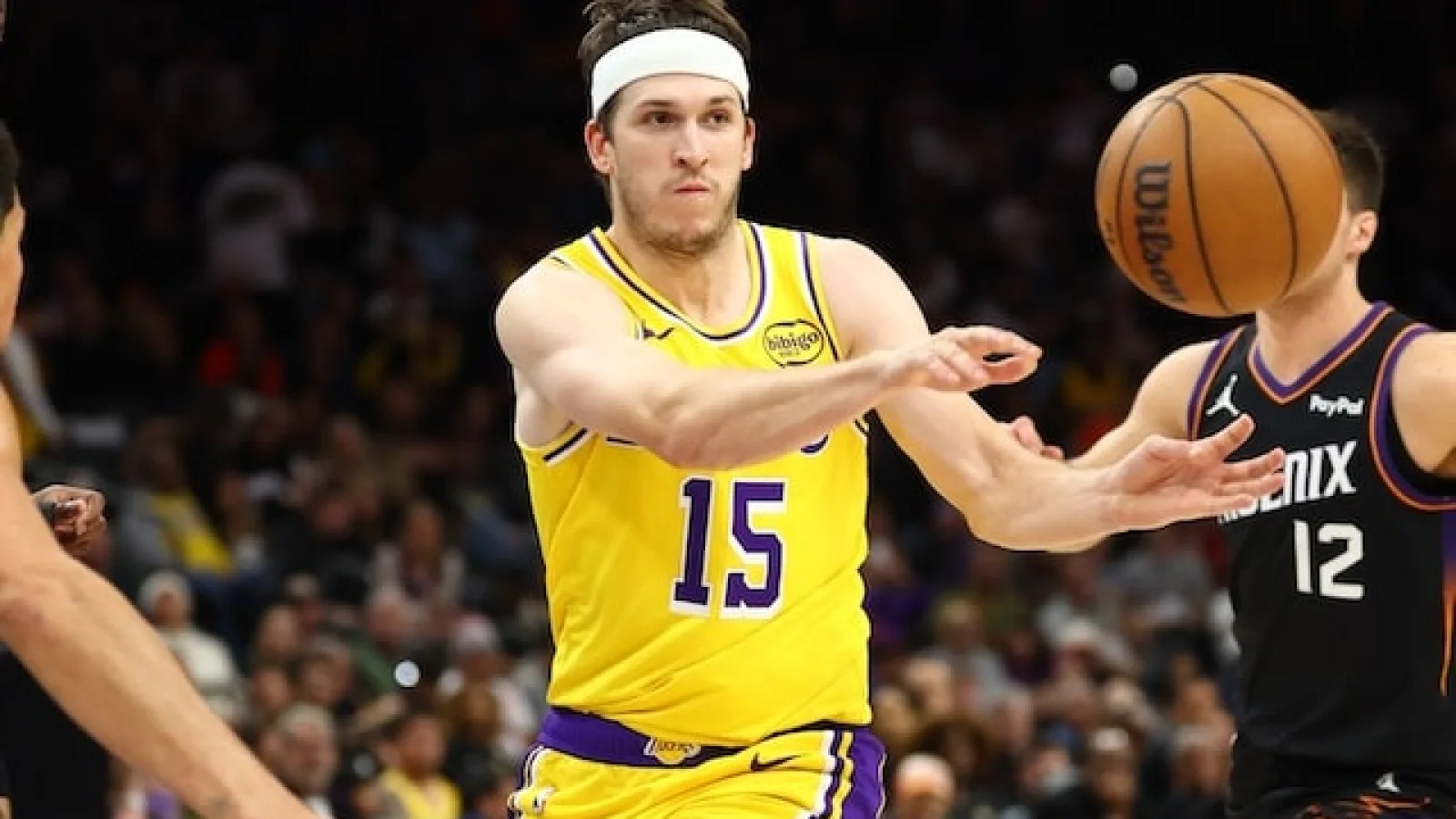
Utah and Atlanta are being identified as teams with known interest in Austin Reaves, while market expectations around his next number are landing near the $40 million annual range, according to reporting cited from Sam Amick and Dan Woike. That combination makes Reaves one of the clearest pressure points in the next transaction cycle.
The headline is not only the dollar figure. It is the overlap between demand profile and role scarcity. Reaves gives teams a blend of secondary creation, decision control, and off-ball compatibility that is difficult to replicate without overpaying in either picks or cap flexibility. When multiple teams with different roster timelines circle the same profile, the market usually hardens fast.
For the Lakers, this is a leverage-and-identity moment. If they keep Reaves, they preserve a connector piece who stabilizes half-court possessions and scales beside stars. If they move him, they need return value that clearly improves ceiling outcomes, not just bookkeeping relief. The rumored salary range raises the cost of indecision, because waiting can tighten options.
For Utah and Atlanta, interest is understandable. Both teams can justify a move for a high-IQ guard-wing creator, but the strategic question is fit-to-price ratio. Paying near top-tier money requires confidence that Reaves’ usage can expand without efficiency drop and that roster context will amplify, not dilute, his strengths.
None of this confirms a transaction. It confirms that executive attention is concentrated and the valuation band is becoming public. In NBA deal cycles, that is usually the phase right before serious framework testing begins.
Bottom line: Reaves is now in the center of a real market conversation. If the $40M range holds and interest from Utah and Atlanta stays active, the Lakers may soon face a consequential decision between continuity and aggressive reallocation.

No comments yet. Start the conversation.