
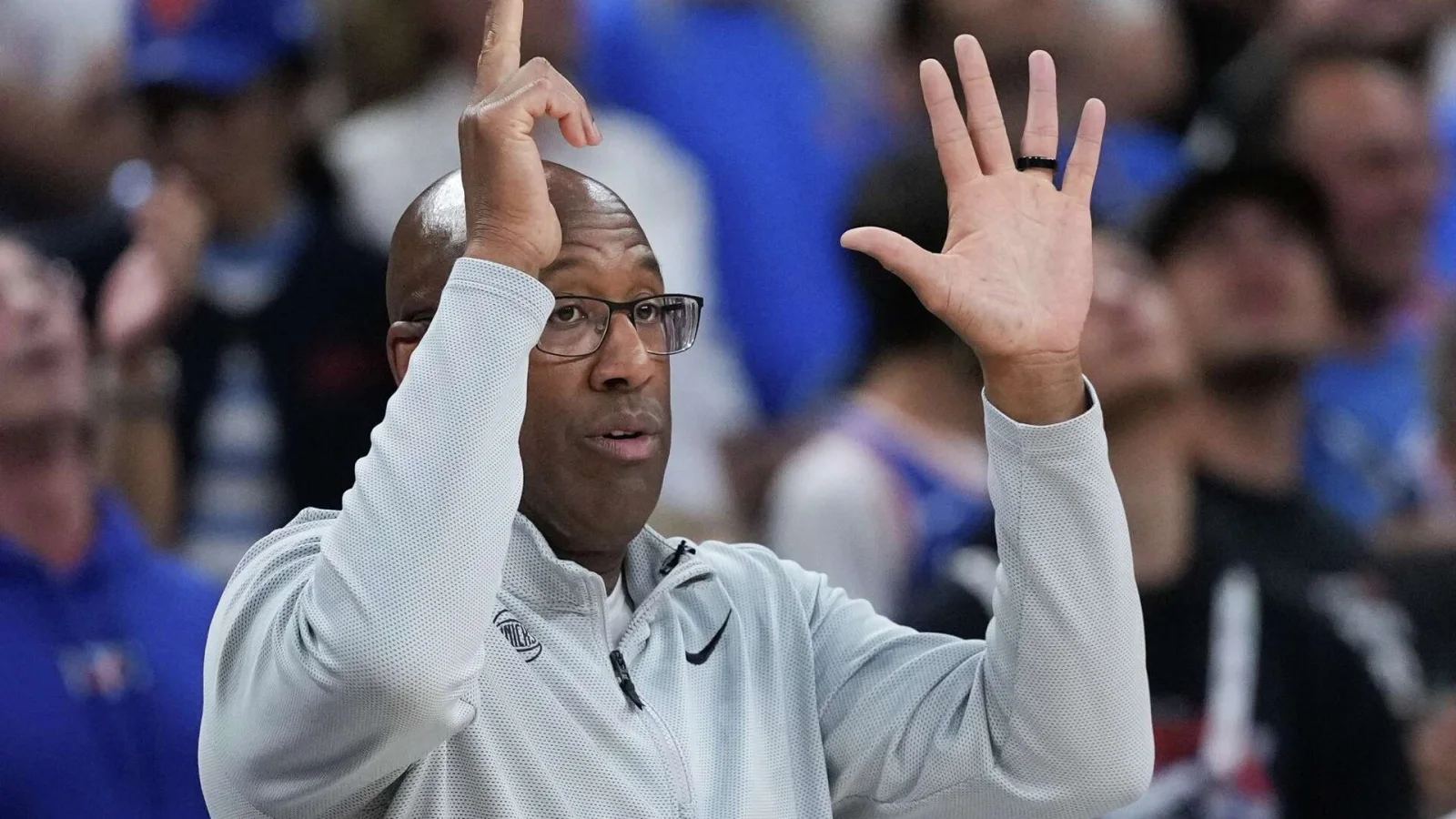
The Knicks conversation around Mike Brown has sharpened into one central claim: this is exactly the phase he was brought in to manage. As expectations rise and game-to-game pressure tightens, Brown’s value is being framed less as regular-season stewardship and more as high-leverage problem-solving in a volatile postseason environment.
What is being reported in fan and media circulation is straightforward: New York views this stretch as a test of composure, adjustments, and command under stress. What remains open is how far tactical flexibility can carry the group against elite opponents if half-court possessions become more possession-by-possession and margin-for-error shrinks.
Brown’s reputation has long centered on structure, defensive accountability, and rotation discipline. In this context, that profile matters because the Knicks do not just need effort—they need clean decision architecture late in games, sharper counters after timeout windows, and a reliable framework when primary options are pressured out of preferred spots.
The bigger storyline is organizational timing. New York is no longer selling potential; it is being judged on conversion. That changes the coaching lens from development to delivery, where every substitution pattern and coverage adjustment is interpreted through immediate outcome pressure rather than long-horizon growth.
Bottom line: the ‘hired for this moment’ framing is not empty rhetoric. It reflects a real expectation that Brown’s experience translates into playoff-grade control when stakes peak and noise intensifies around every result.

No comments yet. Start the conversation.