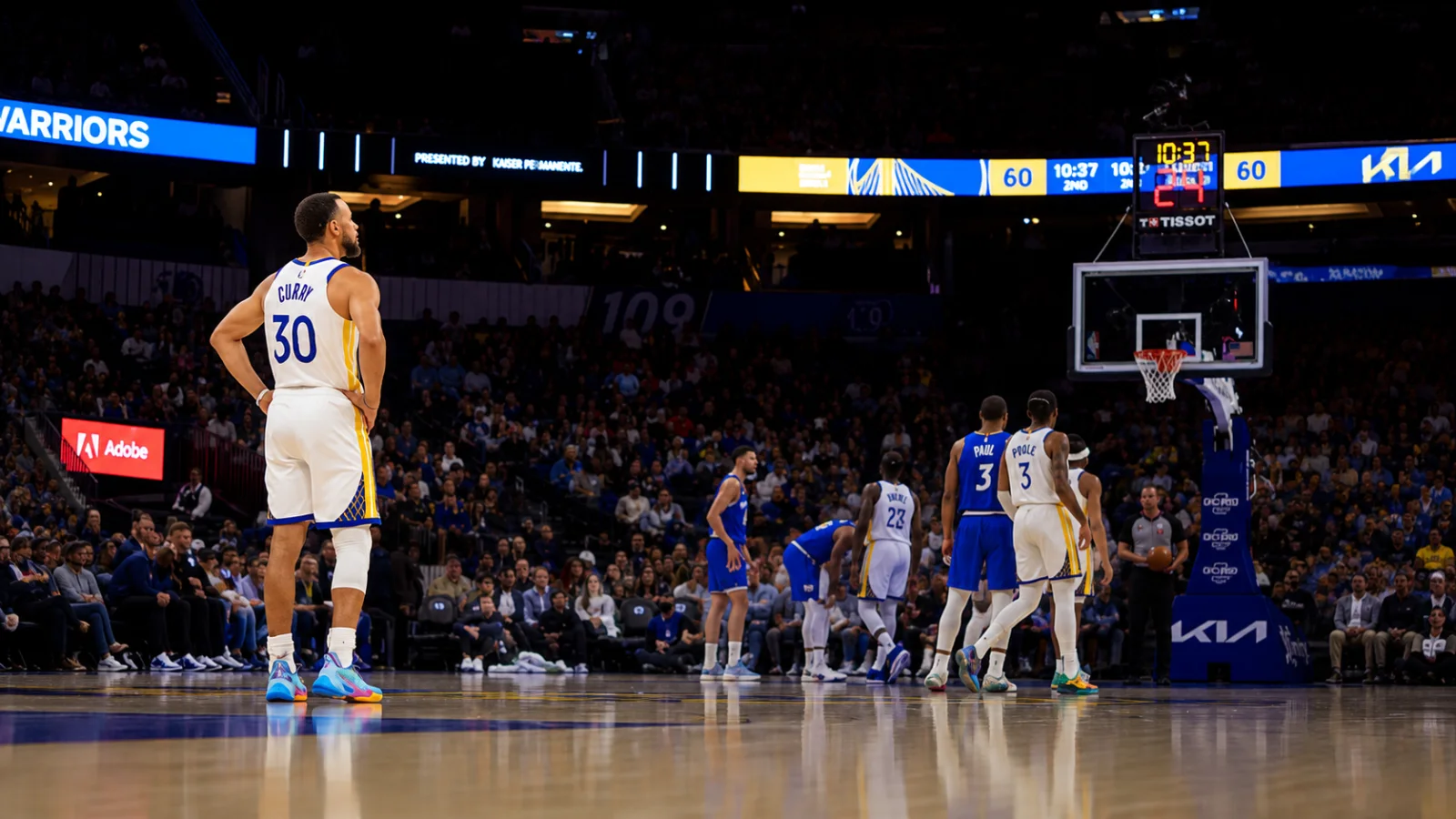
The Warriors' quietest argument is also the one that matters most.
Golden State can still talk itself into continuity. The case is not complicated: Stephen Curry, Draymond Green, Al Horford and Kristaps Porzingis give the roster a deep veteran base, Jimmy Butler changed the team's tone after arriving in February, and the Warriors still have younger pieces who can grow into cleaner roles around them.
That was the shape of a popular Warriors discussion this week. The optimistic view is that last season never really gave Golden State a clean version of the group. Roles shifted, injuries interrupted the rotation, and the schedule made the first half feel heavier than a normal evaluation window. If the roster gets actual time together, the argument goes, Steve Kerr and the veterans should be able to find a workable regular-season path.
There is some logic there. Curry remains the system. Draymond still organizes the defense. Horford can settle second-unit possessions instead of being asked to carry too much. Porzingis, if healthy, gives Golden State a different kind of frontcourt spacing and rim presence. Butler gives the Warriors a late-clock option they did not have before the trade.
The problem is that every sentence in that argument comes with a condition attached. Curry's knee has to hold up. Draymond has to stay available. Porzingis has to look more like himself. Butler has to be healthy enough to be the February version Golden State liked. Horford has to age gracefully in a bench role. That is a lot of trust in a roster built around mileage.
The young-player piece may decide whether the whole idea works. Brandin Podziemski showed scoring flashes when Curry sat last season, but flashes are not the same as a stable second-side creator. Moses Moody can help if he is available and assertive. Gui Santos, Yaxel Lendeborg and other depth pieces can make the rotation feel bigger, but at least one young Warrior probably has to become a real offensive answer for the team to survive rough stretches.
That is where the fan optimism and the practical concern meet. Continuity is valuable when it makes roles clearer. It is not a cure for a roster that cannot score when Curry is off the floor. Golden State can defend, pass and organize better than most teams if its veterans are upright, but close games still swing on shot creation.
The Warriors do not need every young player to jump at once. That almost never happens. They need one or two smaller leaps that change the regular-season math: a steadier Podziemski, a more confident Moody, a rookie who can finish possessions without Kerr having to hide him. Those improvements would let the veterans manage the season instead of dragging it.
So the continuity case is real, but it is narrow. Golden State is not selling a rebuild or a clean youth movement. It is betting that its veteran group can still think the game better than younger opponents, and that the supporting cast can score just enough to keep the season from becoming another injury audit.
That is a defensible bet. It is also a fragile one. The Warriors can compete if the healthy version of the roster finally gets a runway. If not, continuity becomes another word for waiting on the same questions to answer themselves.
No comments yet. Start the conversation.