Profile
About Collin Gillespie
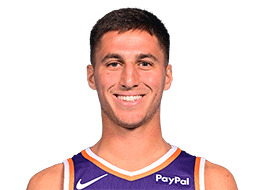
Gillespie is a cerebral point guard whose professional ascent was delayed by injuries but accelerated by persistence, high-level shooting, and a winning mentality forged in one of the most demanding college programs in the country. His journey from a high school player with no Division I scholarship offers entering his senior year to a Big East Player of the Year, an NBA champion, and a reliable NBA rotation guard reflects meticulous improvement, adaptability, and an understanding of how to run an offense within a structured system. His time at Villanova under Jay Wright prepared him for the professional level, and his post-college path through Denver and Phoenix demonstrates his capacity to overcome setbacks and seize opportunity when it arrives.
Born Collin Andrew Gillespie on June 25, 1999, just outside Philadelphia, he is the son of a police officer. He attended Archbishop Wood Catholic High School, where coach John Mosco oversaw his development. Entering his senior year, Gillespie had no Division I scholarship offers. Strong play at a tournament changed that, drawing interest from Rider, Hofstra, and Villanova. He scored 42 points in a win over Neumann Goretti that featured Kentucky recruit Quade Green. He led Archbishop Wood to the 2017 PIAA Class 5A state championship, averaged 24.1 points per game as a senior, and was named Philadelphia Player of the Year by the Philadelphia Daily News and Catholic League Most Valuable Player. On April 14, 2017, he signed a letter of intent with Villanova.
Gillespie enrolled at Villanova in the fall of 2017 and initially wanted to redshirt his freshman year. Coach Jay Wright rejected the idea, noting that Gillespie was playing above his years. He broke into the rotation quickly but fractured a bone in his left hand during practice on December 10 and missed more than a month. He returned on January 17 against Georgetown. He provided quality minutes in relief, scoring eight points with two three-pointers in a win over Creighton while Phil Booth was sidelined with a similar hand injury. He made his first start on February 10 in a win over Butler. In the NCAA tournament, he scored nine points with a steal against Radford and contributed four points and five rebounds in the championship game win over Michigan. He averaged 4.3 points in 14.4 minutes with a 2.6-to-1 assist-to-turnover ratio.
As a sophomore, Gillespie scored a season-high 30 points against Georgetown on February 3, 2019, and had 22 points against Seton Hall on March 9. He averaged 10.9 points per game. Coming into his junior season, he broke his nose in practice and wore a protective mask for several games. He had 27 points and six assists in a loss to Baylor in the Myrtle Beach Classic final and was named to the All-Tournament Team and Big East Player of the Week. On January 28, 2020, he posted his first double-double with 17 points and a career-high 13 rebounds against St. John's. He scored a season-high 29 points against Temple on February 16. He finished the season averaging 15.1 points, 4.5 assists, and 1.2 steals and was named Second Team All-Big East on a 24-7 team.
Before his senior season, Gillespie was named to the Bob Cousy Award watchlist and Preseason First Team All-Big East. On March 3, 2021, he tore his MCL against Creighton, ending his season. He was still named Big East co-Player of the Year alongside teammate Jeremiah Robinson-Earl and Seton Hall's Sandro Mamukelashvili, averaging 14.0 points and 4.6 assists. He used the additional year of eligibility granted by the NCAA due to the pandemic and returned for a fifth season. On February 15, 2022, he scored a career-high 33 points on a swollen ankle in a win at Providence. He was named outright Big East Player of the Year for the 2021-22 season.
After going undrafted in 2022, Gillespie signed a two-way contract with the Denver Nuggets. In Summer League, he averaged 11.3 points, 5.3 rebounds, and 4.3 assists. On July 30, 2022, he underwent surgery for a lower leg fracture that cost him his entire rookie season. Despite never making his NBA debut, he was part of the Nuggets 2023 championship team. On July 18, 2023, he re-signed on another two-way deal. On July 2, 2024, he signed a two-way contract with the Phoenix Suns and made his debut on October 26 in a win over Dallas. On March 4, 2025, he scored a season-high 10 points with two three-pointers in a 23-point comeback win over the Clippers. On March 17, 2025, he made his first career start against Toronto.
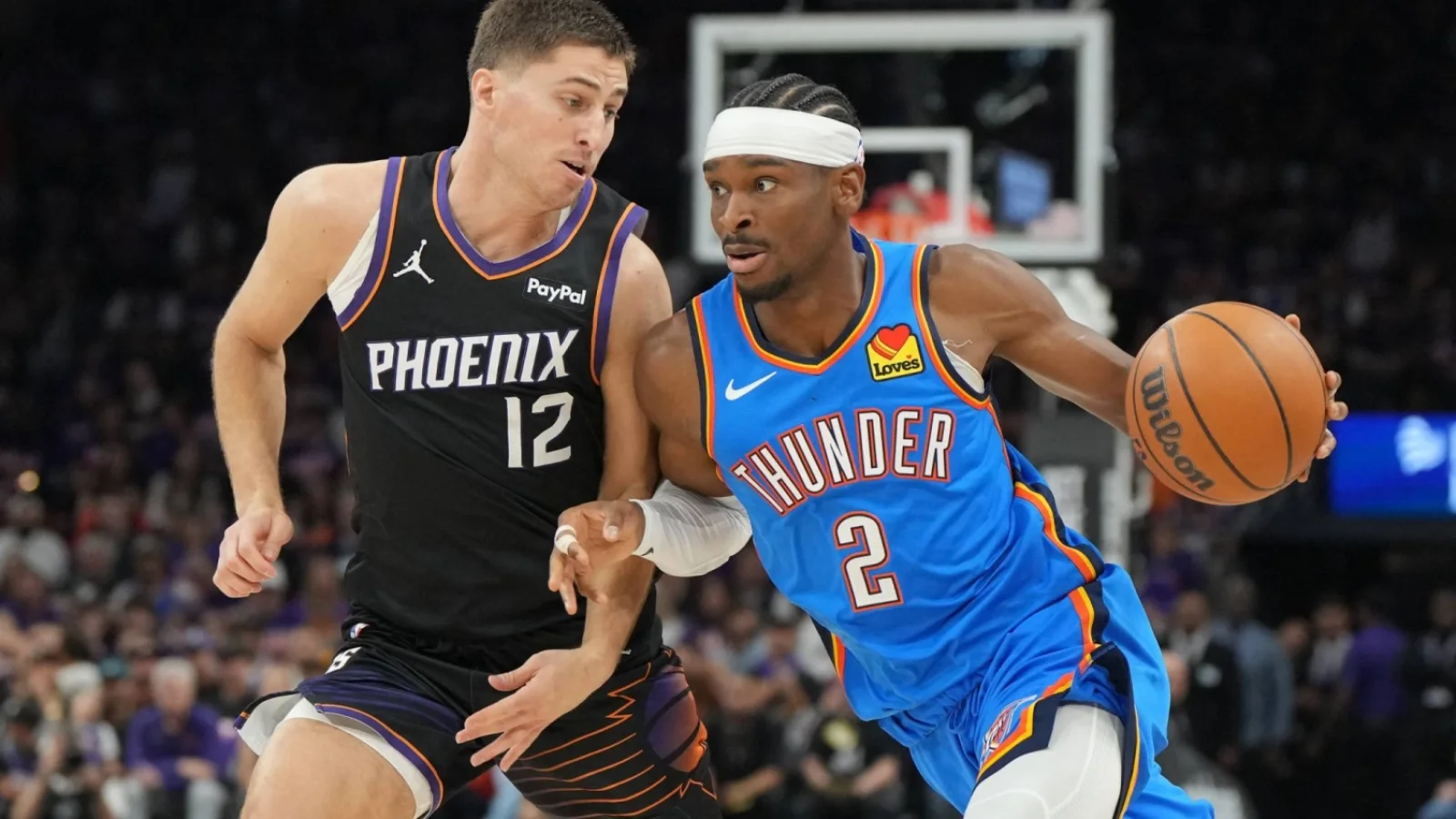
On July 2, 2025, Gillespie re-signed with Phoenix on a one-year, $2.3 million contract. On November 21, 2025, he hit a game-winning jumper with 6.4 seconds left in a 114-113 win over Minnesota. On February 3, 2026, he scored a career-high 30 points in a 130-125 win over Portland. During the 2025-26 season, he averaged career-highs in nearly every major statistical category, including 12.7 points, 28.5 minutes, 4.6 assists, and 58 starts. He helped the Suns clinch a 45-37 record and the eighth seed in the play-in and playoffs after a win over Golden State. They drew top-seeded Oklahoma City in the first round. He made his playoff debut with eight points and two assists in a Game 1 loss on April 19 and scored a playoff career-high 20 points in a Game 4 loss on April 27, which ended the Suns season. He also won bronze with USA Basketball at the 2019 Pan American Games in Peru, scoring 25 points against the Dominican Republic.
Gillespie is a fundamental point guard who thrives in structured systems. His strengths are three-point shooting, low turnovers, pick-and-roll execution, and leadership. He reads defenses well, moves the ball, and makes open shots. He is not an elite athlete or a high-volume scorer, but his understanding of spacing, timing, and defensive positioning allows him to function effectively in a starting or backup role. His main limitations are his lack of top-end burst, size disadvantages against bigger guards, and reliance on system structure rather than isolation creation. His rise from overlooked high school prospect to NBA starter and playoff contributor in Phoenix illustrates how intelligence, shooting, and persistence can overcome physical limitations in modern basketball.