Profile
About CJ McCollum
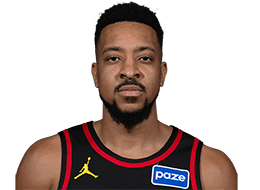
McCollum is one of the most accomplished mid-major products in modern NBA history, evolving from a 5 ft 2 in high school freshman into a lottery pick, an All-Star-caliber scorer, and the president of the players union. Drafted 10th overall by Portland in 2013, he spent eight seasons as a Trail Blazer, won the 2016 Most Improved Player award, formed a dynamic backcourt with Damian Lillard, and later played for New Orleans, Washington, and Atlanta. His college career at Lehigh included two Patriot League Player of the Year awards and a landmark NCAA tournament upset of Duke.
Born Christian James McCollum on September 19, 1991, in Canton, Ohio, he attended GlenOak High School. As a freshman in 2005, he was only 5 ft 2 in but played varsity and relied on athleticism. He experienced a late growth spurt, gaining five inches as a sophomore and four more as a junior, putting him on the radar for college recruiters. In his first game as a junior, he scored 54 points, setting school and Stark County records. As a senior, he averaged 29.3 points, refined his shooting stroke, finished as GlenOaks all-time leading scorer with 1,405 points, and was named Gatorade Ohio Player of the Year for 2008-09.
McCollum played four seasons at Lehigh University. As a freshman in 2009-10, he averaged 19.1 points and 5.0 rebounds, shot 45.9 percent from the field, was the leading freshman scorer in the nation, and became the first player in Patriot League history to be named both Player and Rookie of the Year. He was an Associated Press honorable mention All-American and led the Mountain Hawks to the 2010 NCAA tournament, where he scored 26 points in a first-round loss to Kansas. As a sophomore, he averaged 21.8 points and 7.8 rebounds and was named First Team All-Conference. As a junior in 2011-12, he again earned Patriot League Player of the Year and First Team All-Conference. In the 2012 NCAA tournament, he scored 30 points in Lehighs 75-70 upset of second-seeded Duke, the schools first-ever NCAA tournament win and only the sixth time a 15-seed defeated a 2-seed. A foot injury limited his senior season to 12 games.
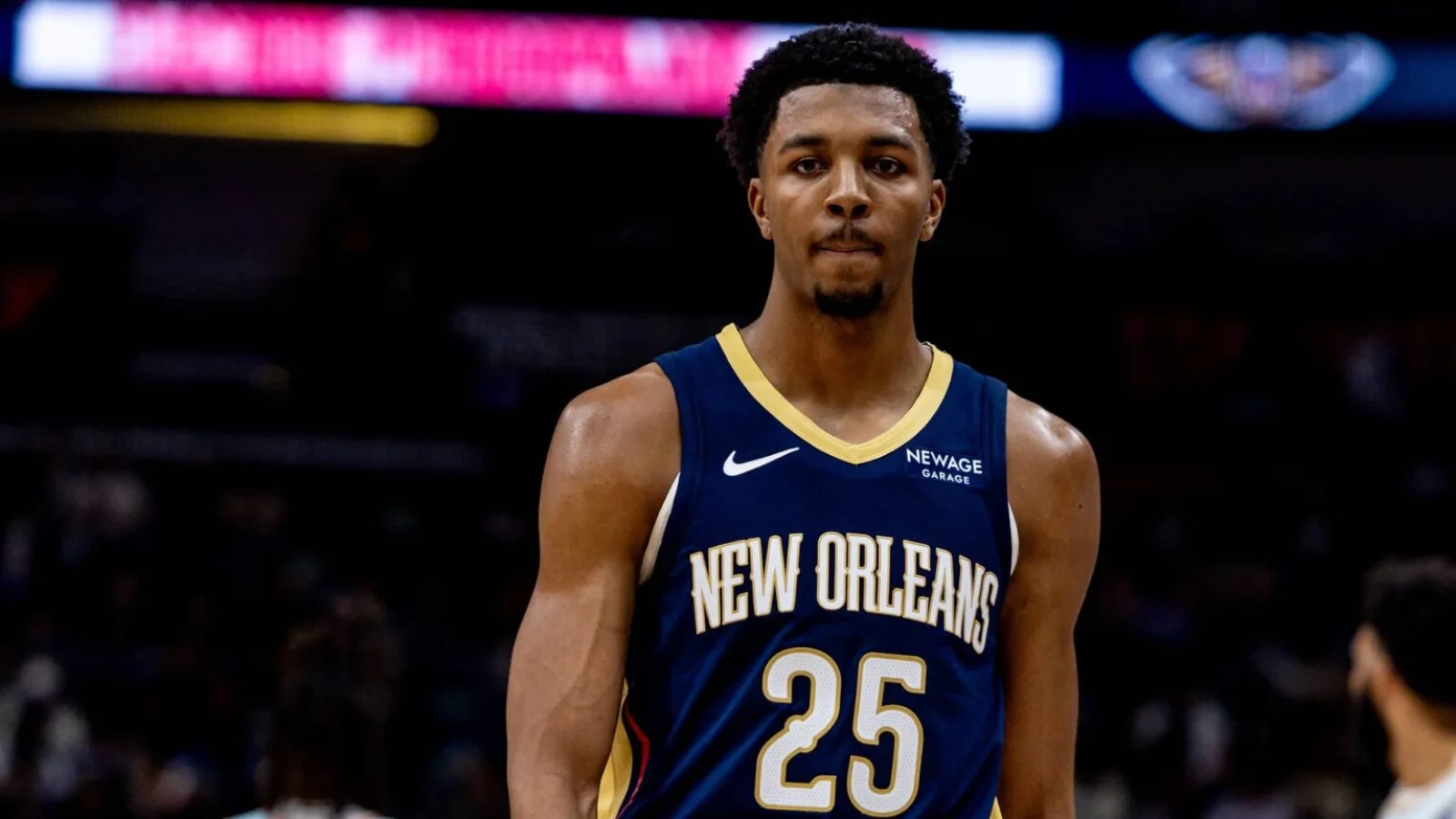
The Portland Trail Blazers selected McCollum 10th overall in the 2013 NBA draft. After two injury-plagued seasons, he broke out in 2015-16, averaging 20.8 points, 3.2 rebounds, and 4.3 assists, and was named the NBA Most Improved Player. He formed one of the leagues most potent backcourts with Damian Lillard and helped Portland reach the Western Conference Finals in 2019. In 2022, the Trail Blazers traded him to the New Orleans Pelicans. In 2025, he moved to the Washington Wizards, and in 2026, he was traded to the Atlanta Hawks. He served as president of the National Basketball Players Association from 2021 to 2025.
McCollum is a scoring guard with elite shooting range, craft off the dribble, and a reliable mid-range game. He creates separation with crossovers, step-backs, and change-of-pace dribbles, and finishes with either hand around the rim. His three-point shooting improved steadily, and he became one of the most efficient pull-up shooters in the league. Playmaking is a secondary strength; he reads defenses in pick-and-roll and finds rolling bigs and corner shooters. Defensively, he is undersized for a two-guard and relies on positioning and anticipation rather than physicality. His basketball IQ, media presence, and leadership extended beyond the court into union politics and broadcasting.
McCollum enters the 2025-26 season with the Atlanta Hawks. His résumé includes a Gatorade Ohio Player of the Year award, two Patriot League Player of the Year honors at Lehigh, a 54-point high school game, a historic 30-point NCAA tournament upset of Duke, a 10th overall draft selection, the 2016 NBA Most Improved Player award, eight seasons in Portland, a Western Conference Finals appearance, the NBPA presidency from 2021 to 2025, and trades to New Orleans, Washington, and Atlanta. His path from a 5 ft 2 in freshman at GlenOak through Lehigh and into the NBA lottery reflects one of the most improbable developmental arcs among active players, built on shooting refinement, late growth, and persistent offensive excellence.