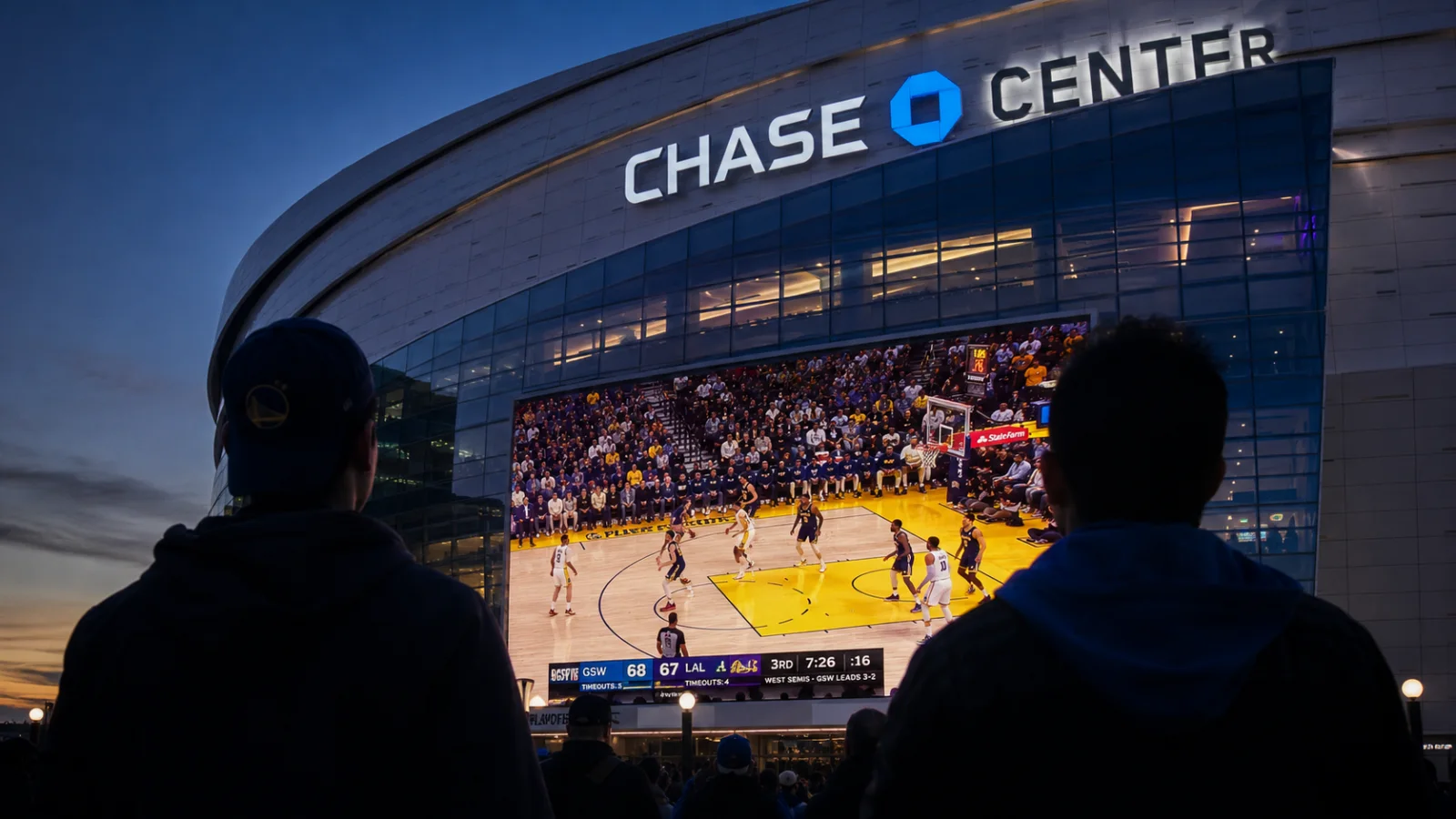
The Warriors are facing a workplace lawsuit from two former employees.
According to The Athletic's Andrew Henderson, Lisa Shelley, also known professionally as Lisa Meyer, and Jennifer Vasquez filed suit in San Francisco County Superior Court last week. The complaint alleges gender, age and race-based discrimination, workplace harassment and retaliation connected to the end of their jobs with Golden State.
Shelley worked for the Warriors as associate general counsel and director of business and legal affairs and risk management. Vasquez was the team's vice president of diversity, equity and inclusion. In the lawsuit, both women describe a workplace they say was marked by discrimination, hostility and retaliation, and they are seeking damages as well as permanent injunctive relief aimed at stopping further discrimination against employees.
The complaint frames the case around a gap between what the plaintiffs expected and what they say they experienced inside the organization. It says both women were drawn to the Warriors partly because San Francisco is one of the country's most culturally diverse cities and a national symbol for human rights. The suit then argues that the culturally responsible, family-oriented environment they expected was not what they endured.
Golden State rejected the allegations in a statement to The Athletic. The franchise said it prides itself on maintaining an inclusive environment grounded in mutual respect and professionalism, and said it takes workplace concerns seriously. The team also said the lawsuit contains allegations it considers false, misleading and unsupported by credible evidence, adding that many of the claims had already been reviewed or investigated and found to be without merit.
The Warriors said they intend to vigorously defend against what they called baseless claims. The team added that it is confident an examination of the facts will show Golden State, its leadership and the employees named in the lawsuit acted with integrity and fairness.
Shelley, who was hired in 2021, alleges the Warriors passed her over for multiple promotions despite what she described as a strong record, including work on corporate partnerships worth more than $4 million and being named employee of the month. The lawsuit claims Golden State promoted a younger male employee with less experience instead.
One of the more specific allegations concerns the Warriors' promotion process. The lawsuit says candidates' photographs are displayed to the senior leadership team during a closed-session vote, and that employees have been denied promotions based on subjective criteria such as likability or fit. The complaint argues that those terms can translate into physical appearance and whether someone fits the organization's preferred aesthetic.
Vasquez began as vice president of DEI in January 2022. The lawsuit says that within a month, she experienced what she considered a climate of isolation and intimidation in which her ideas were routinely dismissed. She also alleges that a colleague asked her birth year during a meeting and that she was laughed at for being over 40.
The suit also describes what Vasquez considered an overly amorous and unprofessional atmosphere among senior leadership. It alleges that others in the organization had similar discomfort, but that Vasquez was advised she would need to play the game to succeed with the franchise.
The complaint points to a 2025 anonymous, NBA-wide employee engagement survey, saying the Warriors' legal, finance, accounting and people operations departments scored poorly. It alleges that Erin Dangerfield, then senior vice president of people and culture and now the team's chief people officer, questioned Vasquez about her survey responses.
Shelley allegedly heard about that issue and reported it internally. The lawsuit says an internal investigation found no wrongdoing by Dangerfield, and that soon afterward, in December 2025, Shelley was told the legal department was being reimagined. That led to her termination, according to the complaint.
Vasquez's departure followed less than two weeks later, according to the lawsuit. The complaint says Dangerfield informed her that Golden State was eliminating the DEI function along with her position. It also alleges the team asked Vasquez to characterize her departure as voluntary, which she declined to do before being terminated in January.
Shelley also alleges the Warriors damaged a potential job move to the LA Clippers this year. According to the lawsuit, she had a conditional offer in June, but the offer was withdrawn days before her scheduled start date after the Warriors allegedly made false and disparaging statements when contacted for a reference. The Clippers declined comment to The Athletic.
The lawsuit includes broader allegations about the workplace culture for women. It claims Dangerfield regularly criticized female employees' bodies, physical appearance and wardrobe choices, and says women of color and women with larger body types were disproportionately targeted. One allegation says Dangerfield referred to some women who wanted to work in professional sports as jersey chasers, meaning women seeking romantic or sexual attention from athletes.
The timing details matter because the retaliation claim is tied to internal reporting, survey responses and the sequence of terminations. Golden State's response is equally central: the franchise says prior reviews found many claims lacked merit, so the case is now positioned as a direct clash between the complaint and the team's internal account.
Those are allegations, not findings. The Warriors have denied the claims and say they will fight them. Justice Ojo, the attorney for Shelley and Vasquez, filed a judicial summons Thursday, and the franchise has 30 days from that date to respond.
For Golden State, the lawsuit lands during an already noisy stretch around the franchise. The basketball side is not the central issue here. The question now moves to the legal record: what the plaintiffs can prove, what the Warriors can rebut, and whether the case exposes more about the internal workplace behind one of the NBA's most visible teams.


No comments yet. Start the conversation.